
Most early childhood platforms across the world solve one piece of the puzzle.
Some help parents track milestones. Others focus on screening for developmental conditions like autism. A few enable remote assessments, while many operate in the therapy and intervention space.
Individually, these solutions are valuable. Collectively, they are incomplete.
Because in reality:
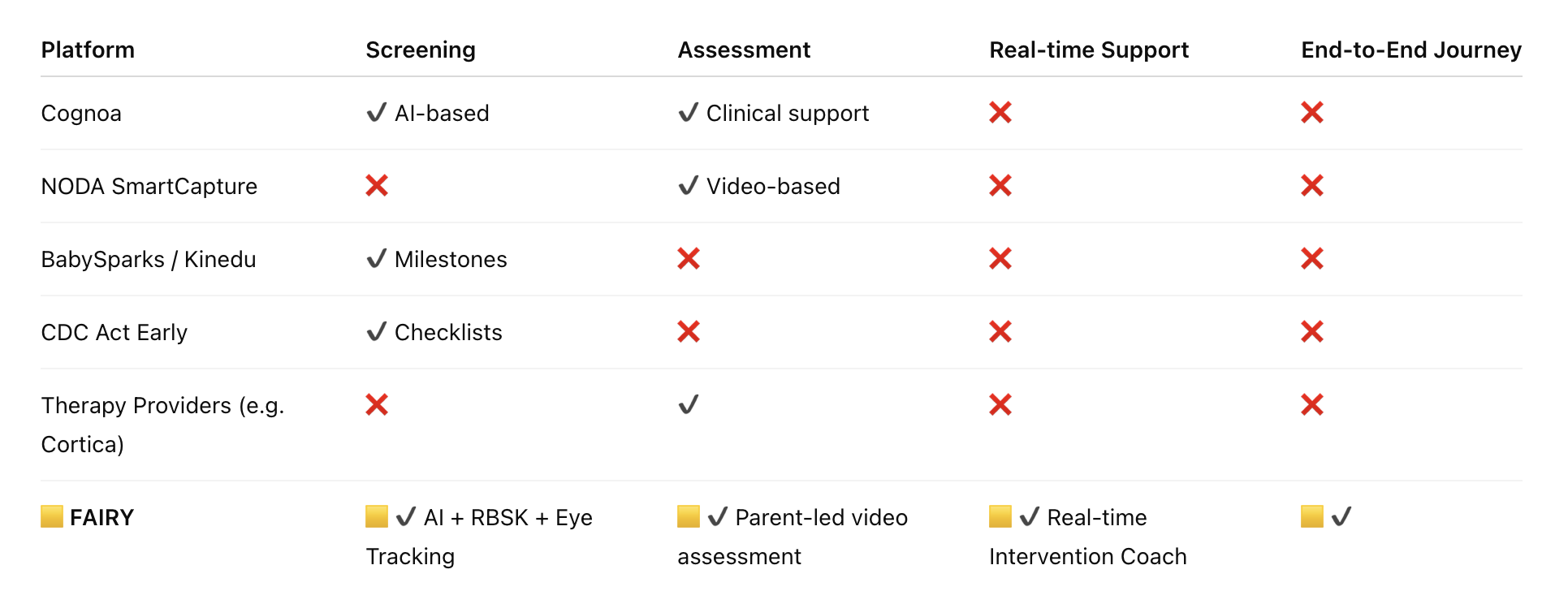
What this makes clear is simple: Everything exists — but nothing is connected.
The Core Problem:
Early childhood development doesn’t happen in stages that can be neatly separated into apps.
A parent doesn’t experience:
“Today I will screen, tomorrow I will assess, next week I will intervene.”
They experience uncertainty. Questions. Moments. And yet, the current ecosystem forces them to:
This delay is not just inconvenient — it is critical. Because in early childhood, time is development.
A Different Approach: Continuous, Parent-Driven Care
At FAIRY, we started with a fundamental shift in thinking:
What if early intervention didn’t begin at diagnosis — but at day one?
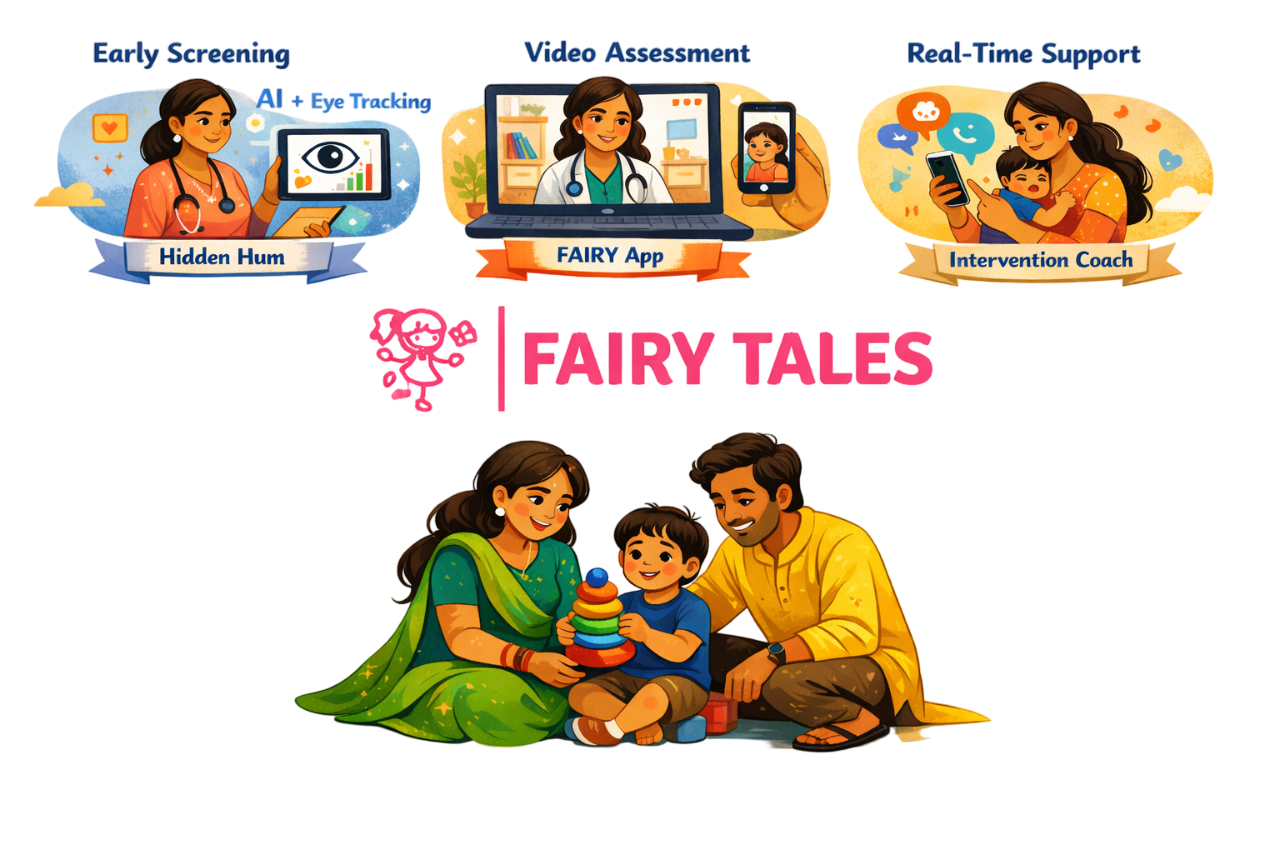
Instead of building another tool, we built a connected system:
Each layer feeds into the next.
Each interaction builds context.
Each decision becomes more informed.
What This Changes
1. Detection becomes proactive, not reactive
No more “wait and watch” when early signals can be identified sooner.
2. Parents become drivers, not bystanders
They are not overwhelmed or dependent — they are enabled with clarity and action.
3. Care becomes continuous, not episodic
From first signal → to structured assessment → to real-time intervention → to therapy
Monitor your little one’s development with Hidden Hum, so you can move forward with clarity today, instead of looking back with guilt later.
This is not about adding another app to a parent’s phone. It is about creating a developmental intelligence layer for early childhood, one that is:
Because the biggest risk in early childhood isn’t delay alone. It’s late detection of delay.
And that’s a problem worth solving differently.
Monitor your little one’s development with Hidden Hum, so you can move forward with clarity today, instead of looking back with guilt later.
